


Prepare your students for the vote at 16 & win prizes!
As the Government plans to lower the voting age to 16 for all UK elections, we have developed new teaching resources to help prepare students.
Help them move beyond the headlines and become champions of creative civic ideas and solutions.
This new, free education programme with the Electoral Commission provides everything you need to help your students answer this important question: “Is it important to vote and why?”. The resources support citizenship, English (oracy) and British Values (democracy).
Plus, your school and students can win great prizes in our ’60-second democracy challenge’ competition!
Register here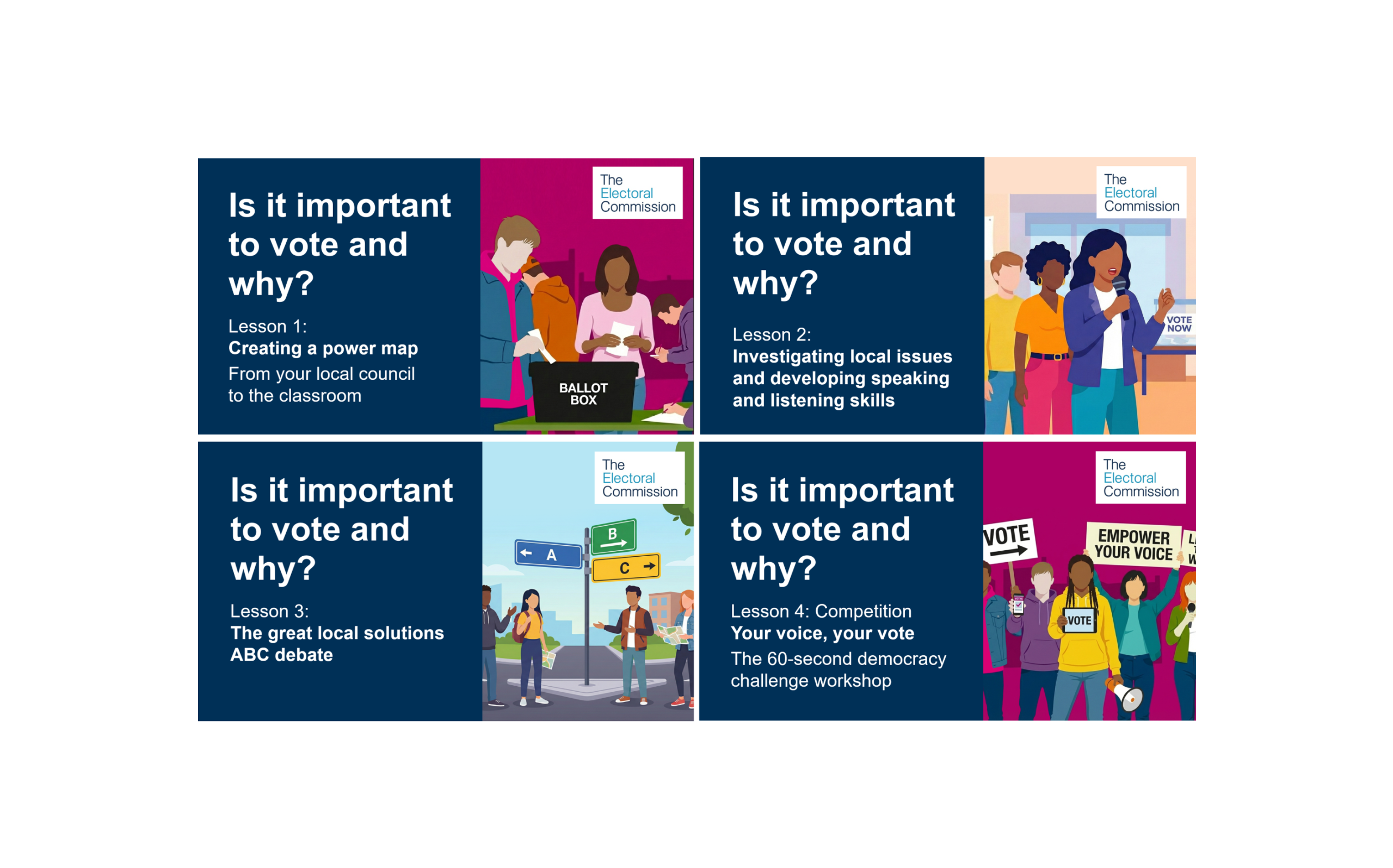
Four free lessons
Ready-to-teach: Fully editable PowerPoint slides with detailed teacher notes. Curriculum aligned: Mapped to upper KS2, KS3 and KS4 citizenship & English (spoken language) and KS5 PSHE, British Values (democracy). Oracy focused: Built-in links to the Voice 21 framework. National competition: a clear project goal with the 60-second democracy challenge.
Short on time?: Just use lesson 4 (or lesson 2 for primary). It summarises the learnings from lessons 1-3, and is a workshop for the competition. Plus, you can spread across tutor/form time sessions.
Register for free resources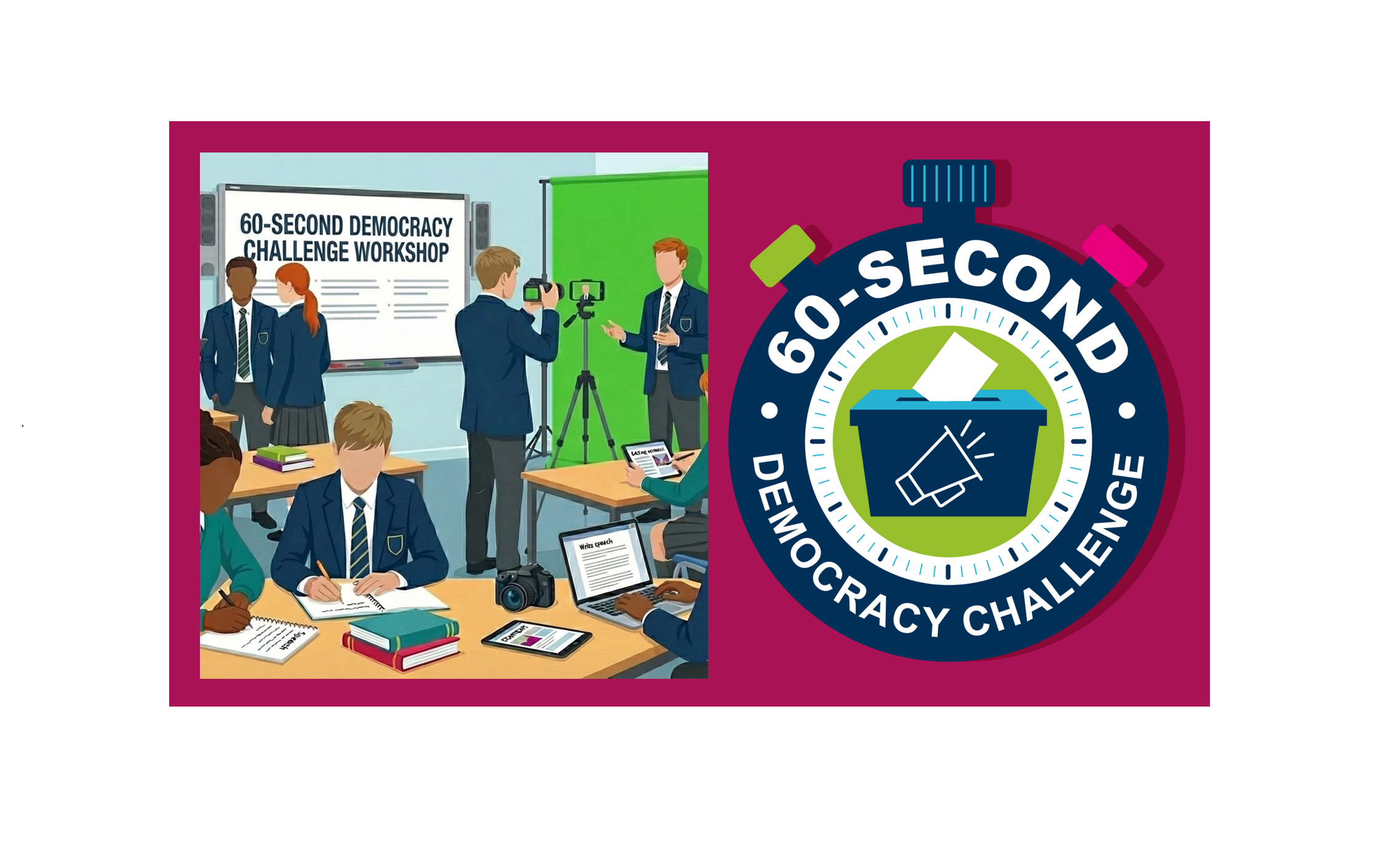
Win great prizes
Students enter the competition by producing a pitch in under 60 seconds answering an important question:
“Is it important to vote and why?”
They can produce their short pitch as a video, podcast, or as a written speech. They can be as creative as they like, including producing their pitch as a poem or rap!
Top prize of £250 in vouchers for both the winning student and their school. Five runners-up prizes of £150 in vouchers for both too!
Register here
Welcome to Your Vote Week
What better time to run this activity than during the Electoral Commission’s Welcome to Your Vote Week 2026? It runs during the week of 9 – 15 March 2026.
More than half a million young people took part last year in Welcome to Your Vote Week 2025.
The Electoral Commission wants even more young people to learn about democracy and voting this year.
Lesson 1: Creating a power map plus follow-up quiz
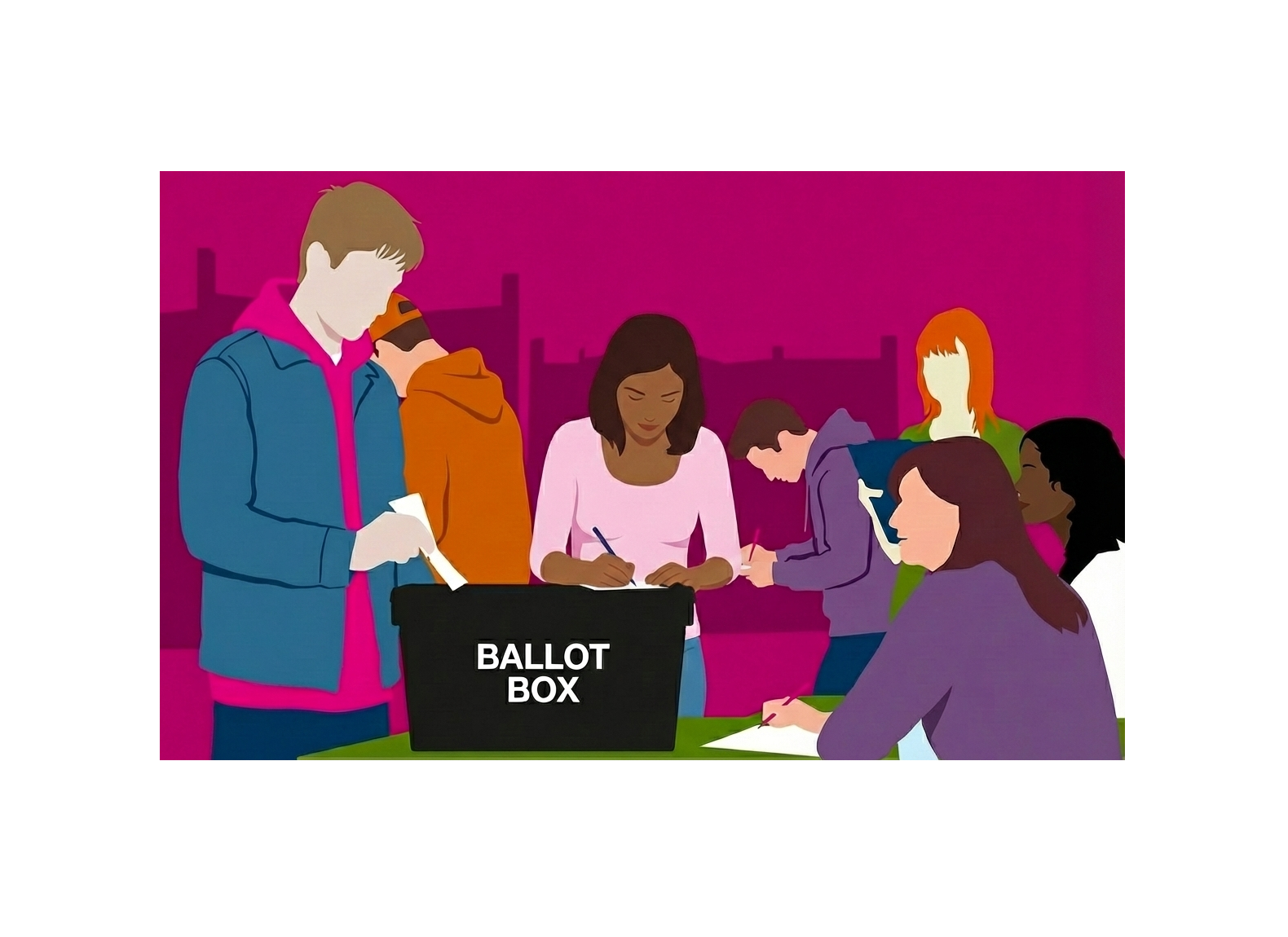
In ‘creating a power map’, students transform into ‘power detectives’ to demystify the UK’s democratic structure.
By distinguishing between the responsibilities of local councils and UK Parliament, learners identify who actually holds the authority to impact their daily routines, from bus routes and street lighting to national education standards.
This session empowers students to understand the immediate local consequences of their democratic choices. There’s also a great quiz!
Lesson 2: Investigating local issues and developing oracy
‘Investigating local issues’ empowers students to champion creative civic ideas and solutions.
Students identify pressing issues in their community and explore innovative global solutions like bee bus stops or community fridges.
Integrating Voice 21 oracy strands, the lesson builds the linguistic and cognitive skills required to deliver a persuasive 60-second “elevator pitch” to key stakeholders, turning community observations into actionable democratic advocacy.
Lesson 3: Great local solutions ABC debate
The ‘great local solutions ABC debate’ explores the complexities of democratic decision-making.
Students respectfully debate three distinct solutions in teams (A, B and C), with a choice of debate topics.
By analysing priorities like cost, speed, quality and fairness, learners practice active listening and respectful disagreement. This session demonstrates that voting isn’t just about choosing a person; it’s about choosing a solution.

Lesson 4: Your voice, your vote - the competition
‘Your voice, your vote’ serves as the series finale and competition workshop. It’s also a ‘one-lesson entry’ for teachers short on time.
Students recap their journey through power, innovation, and debate to craft an entry for the “60-second democracy challenge.”
Students pitch their response to the question “Is it important to vote and why?“. Whether through video, podcast, written speech, poetry, or rap, learners articulate their views on voting.
Register for free resourcesIn partnership with
